
Managing Your Blood Pressure at Home
How do you take your own blood pressure? How do you manage blood pressure? When do you need a doctor for blood pressure?
What is high blood pressure?
High blood pressure (or Hypertension) is a condition in which your heart is working overtime to pump blood through your body. Nearly half of all American adults have high blood pressure, which is why it’s essential to keep track. If left unmanaged, high blood pressure can lead to heart attacks, strokes, and organ damage. Luckily, managing your blood pressure is simple to do with the right tools and information.
How do you take your blood pressure at home?
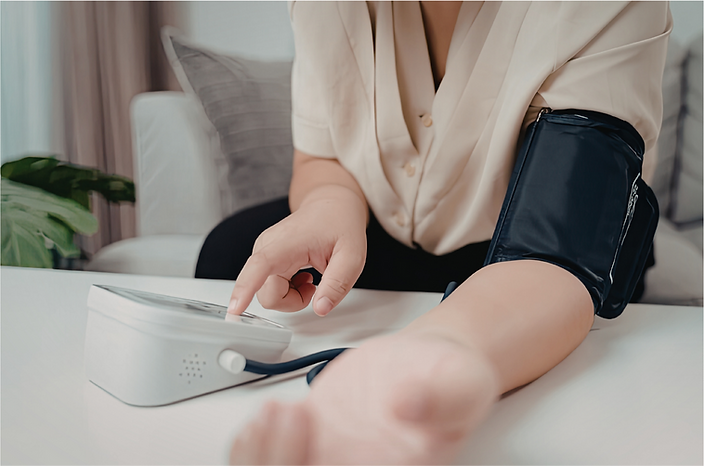
To take your blood pressure at home, you’ll need a blood pressure cuff. You can get one at your local pharmacy or speak to your doctor. Some devices like Apple Watches or Oura Rings, offer blood pressure readings, but the best and most accurate measurements will always be with a cuff.
Once you have your device, you’ll want to make sure you stay consistent and accurate by:
● Taking your blood pressure at the same time every day
● Taking your blood pressure while sitting up straight
● Making sure your arm is lying flat
● Staying still and quiet during the reading
● Avoiding caffeine and exercise 30 minutes before the reading
● Taking multiple readings - especially if something feels off
How do I read my blood pressure?
When you take your blood pressure, you’ll see two numbers. The first number is your systolic blood pressure and the second is your diastolic blood pressure. Both numbers are important, but systolic blood pressure can be more important for those over 50. Here’s a breakdown of what your blood pressure could mean. As always, speak with a doctor before making a self-diagnosis:
Blood Pressure Category | Systolic (First Number) | Diastolic (Second Number) |
Normal | Lower than 120 | Lower than 80 |
Elevated | 120-129 | Lower than 80 |
Hypertension Stage 1 | 130-139 | 80-89 |
Hypertension Stage 2 | 140-180 | 90-120 |
Severe Hypertension (call your doctor) | Higher than 180 (no symptoms) | Higher than 120 (no symptoms) |
Emergency Level Hypertension (go to a hospital) | Higher than 180 (symptomatic - chest pain, weakness, numbness) | Higher than 120 (symptomatic - chest pain, weakness, numbness) |
When do I go to the doctor for my blood pressure?
There’s no wrong time to see your doctor if you’re concerned about your blood pressure. However, if you’re getting consistently high readings or experiencing symptoms like chest pain, numbness, weakness, back pain, or changes in vision and speaking, you’ll want to see a health care professional right away.
Managing your blood pressure at home is only part of the process. An informed health care professional can get you on the right track to manage high blood pressure with lifestyle changes, diet changes, and possible medication.
Make an appointment with your primary care provider at sachealth.org/appointments today and speak to a doctor about long-term heart health. It’s never too late to make a healthy change.


